Quadratic Equation – Class 10 Complete Guide with Solutions
Introduction to Quadratic Equations – Class 10
Before solving quadratic equations, we must understand how they differ from linear equations. Below are the fundamental concepts as required by the Class 10 CDC curriculum in Nepal.
LINEAR VS QUADRATIC EQUATIONS (FOUNDATION CONCEPTS)
What is a first degree equation in one variable called?
Answer: Linear equation in one variable.
What is the highest power of the variable in a first degree equation?
Answer: 1.
Write the general form of a linear equation in x.
Answer: ax + b = 0, where a ≠ 0.
QUADRATIC EQUATION – DEFINITION AND FORMS
What is a second degree equation in one variable called?
Answer: Quadratic equation in one variable.
What is the highest power of the variable in a second degree equation?
Answer: 2.
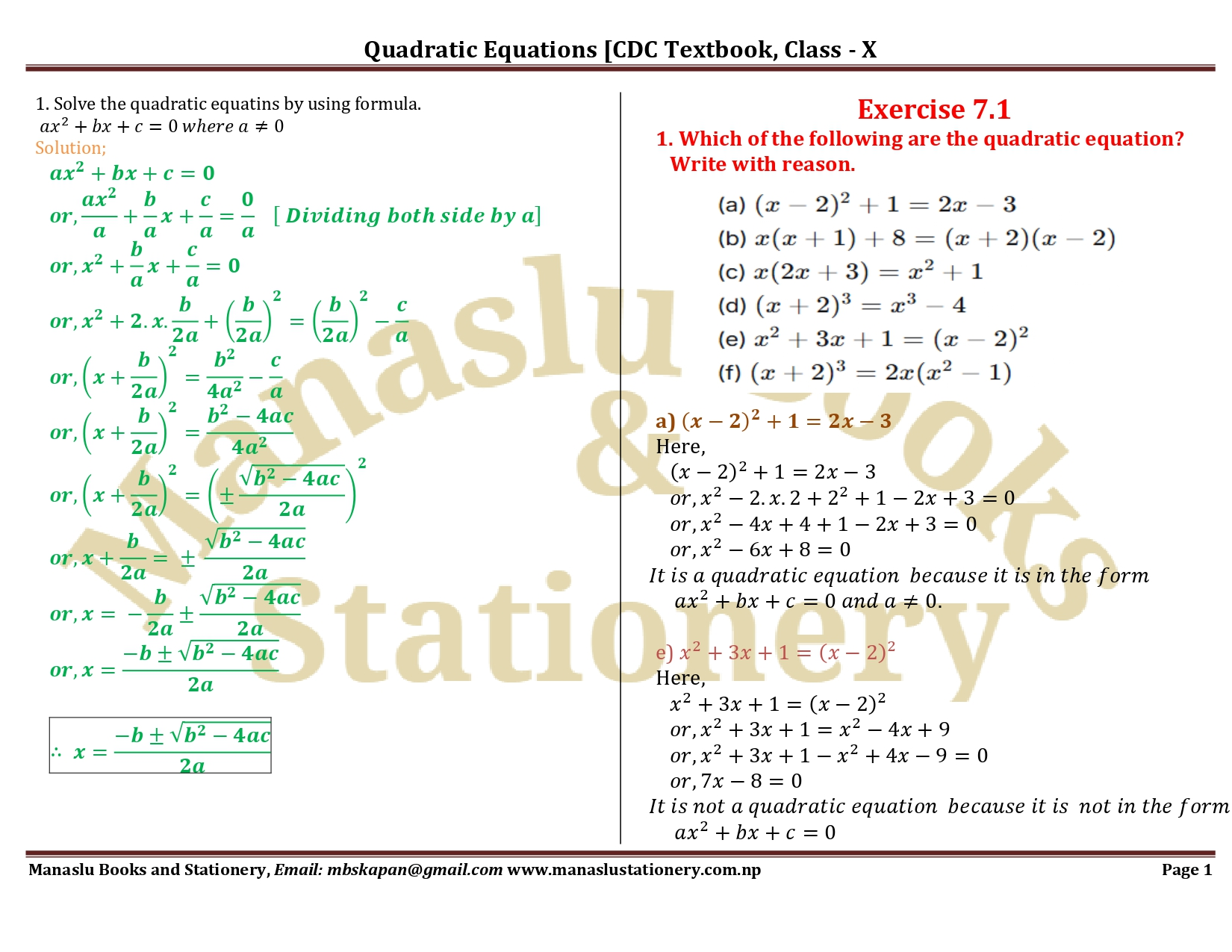
Write the general form of a quadratic equation in x.
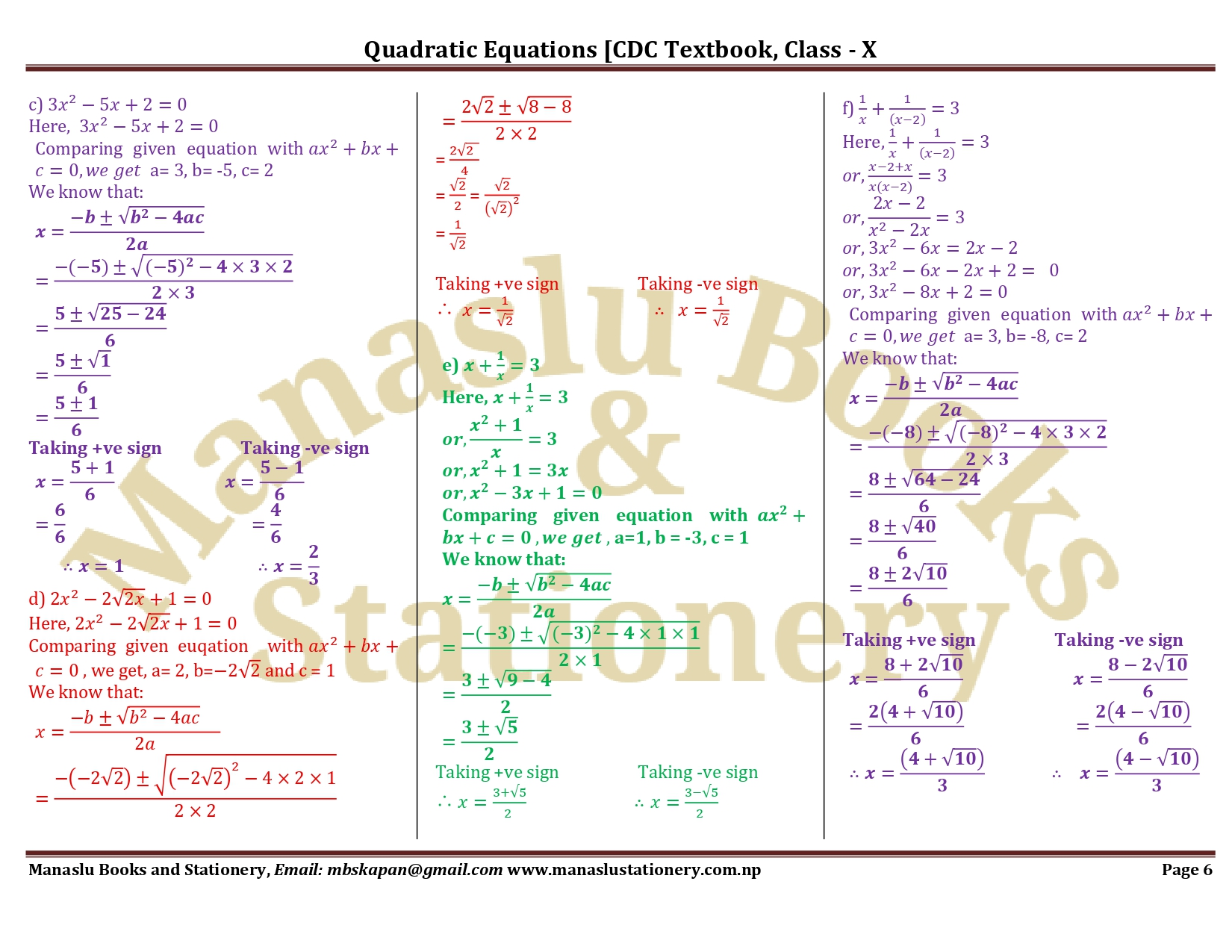
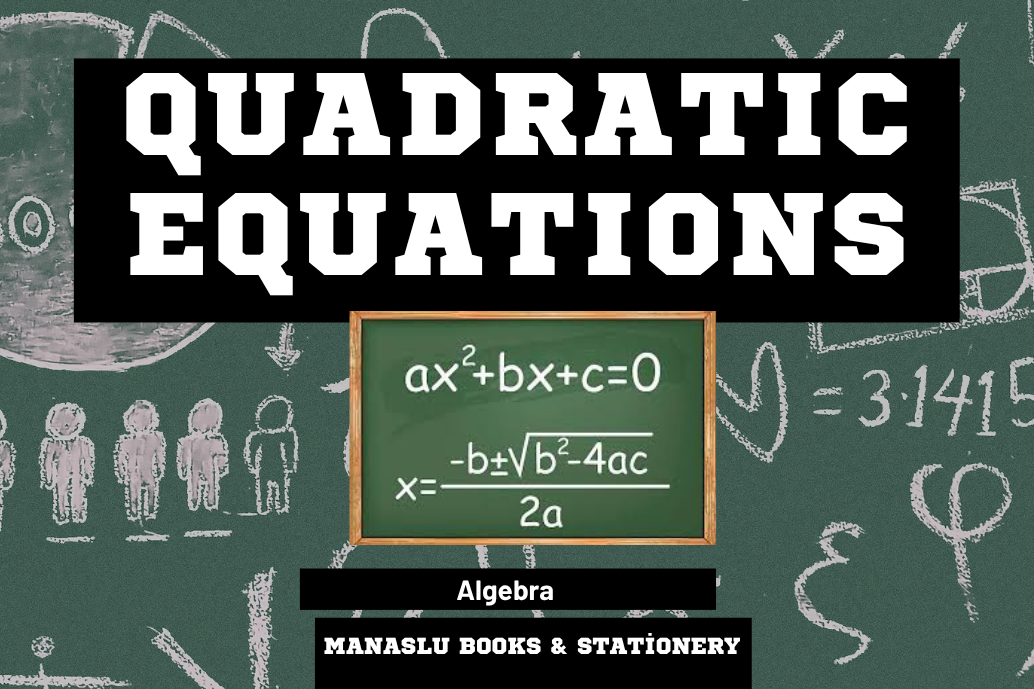
Answer: ax² + bx + c = 0, where a ≠ 0.
What is the general form of quadratic equation called?
Answer: Adfected quadratic equation (when b ≠ 0).
What is a quadratic equation of the form ax² + c = 0 (a ≠ 0) called?
Answer: Pure quadratic equation.
Give one example of a pure quadratic equation.
Answer: x² - 64 = 0.
METHODS TO SOLVE QUADRATIC EQUATIONS (SEE SYLLABUS)
Name three methods to solve a quadratic equation.
Answer:
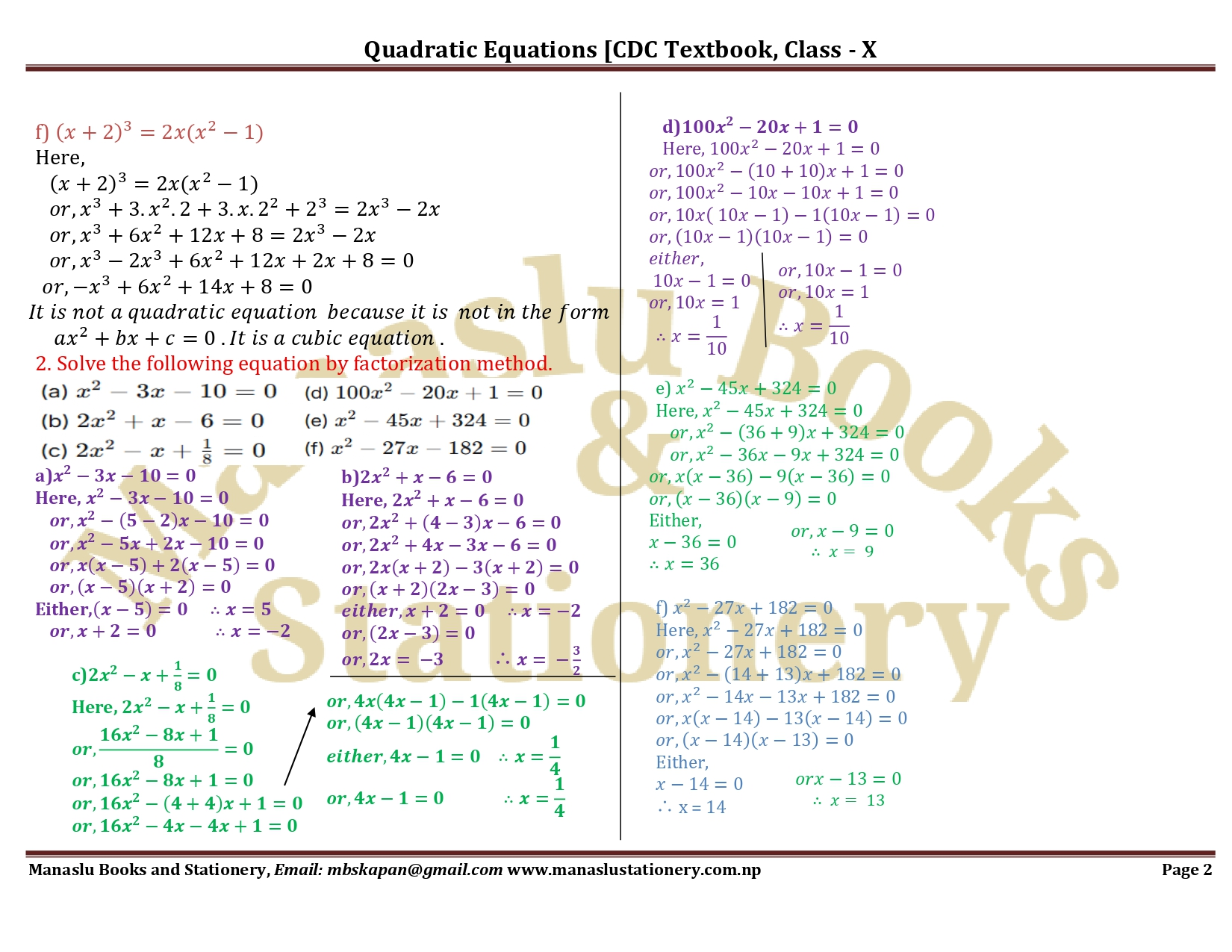
(i) Factorization method
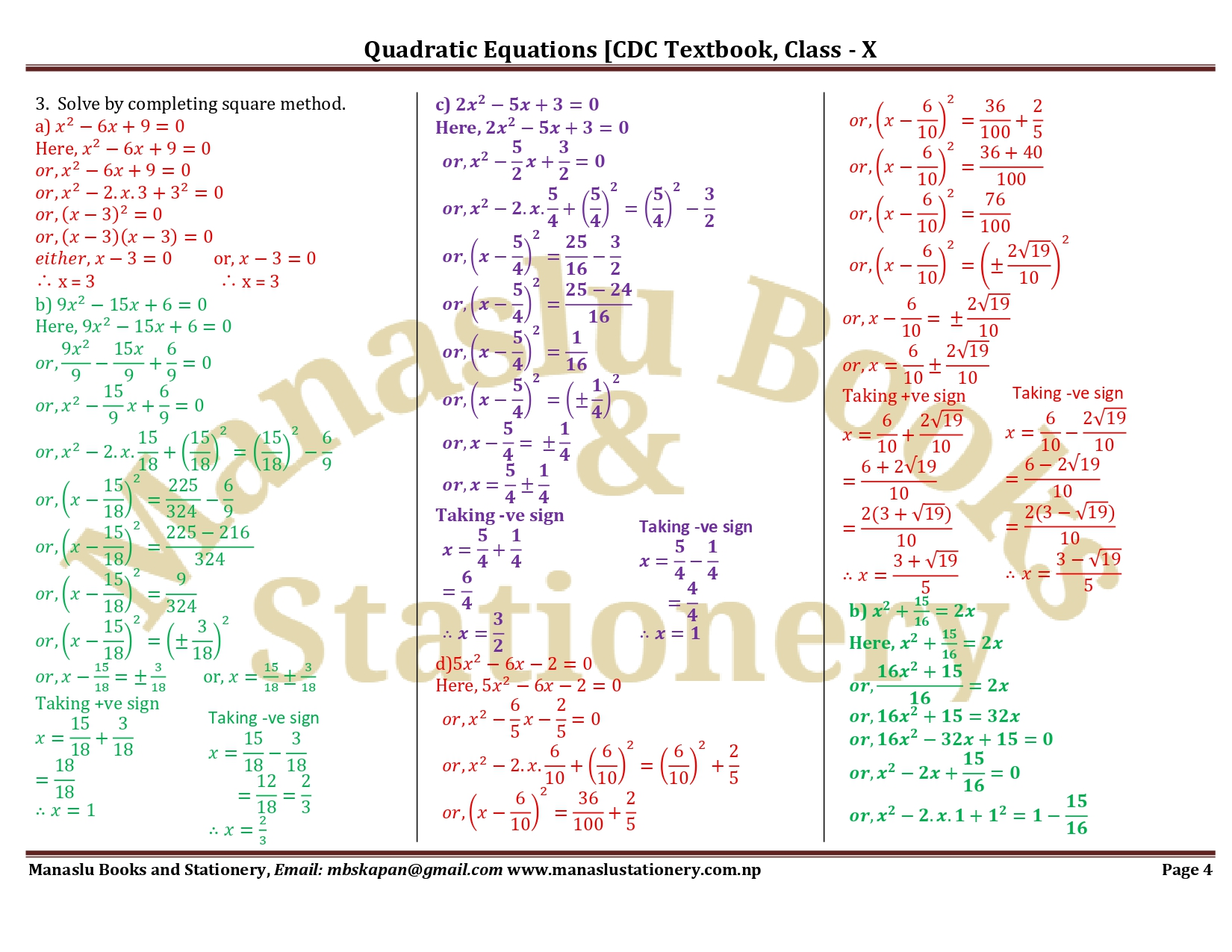
(ii) Completing square method
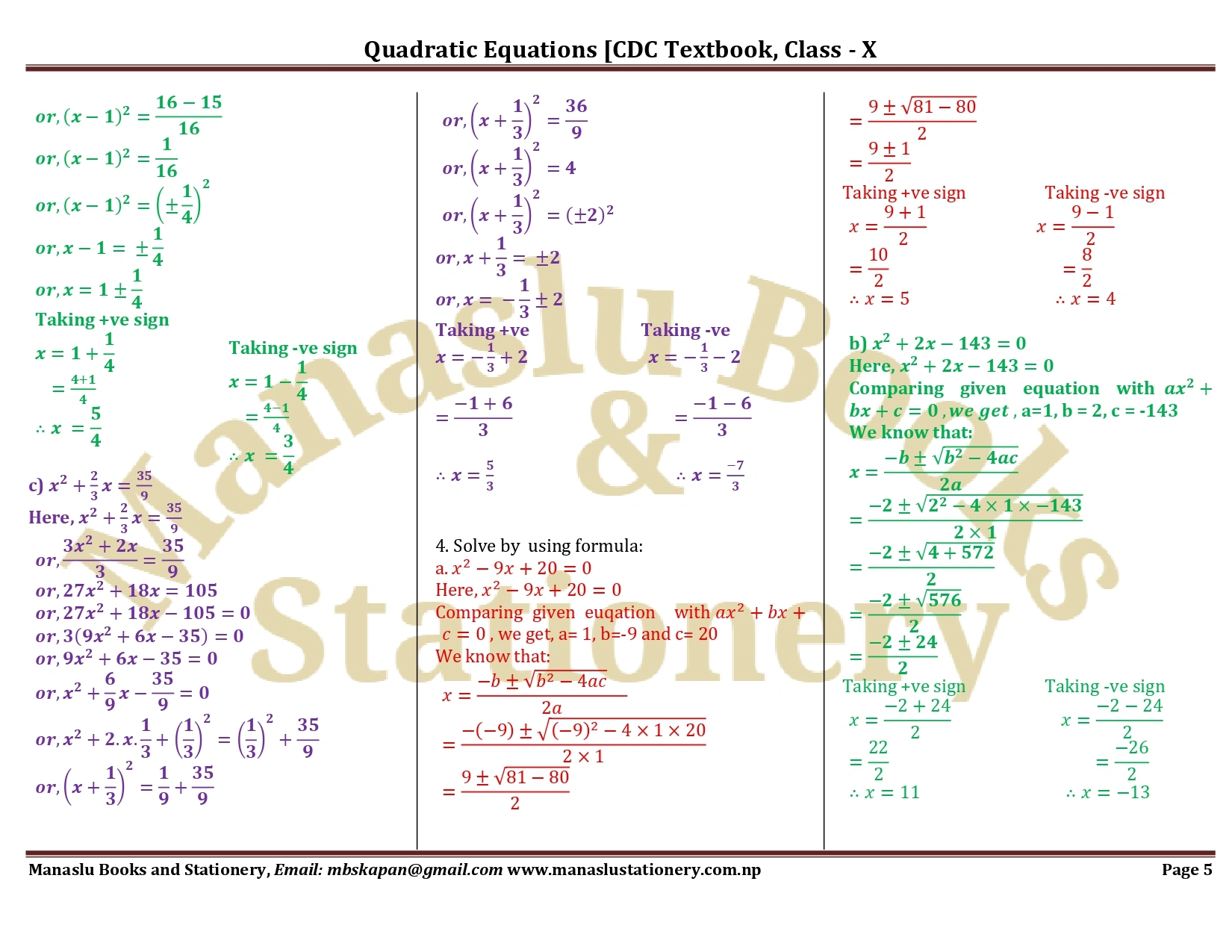
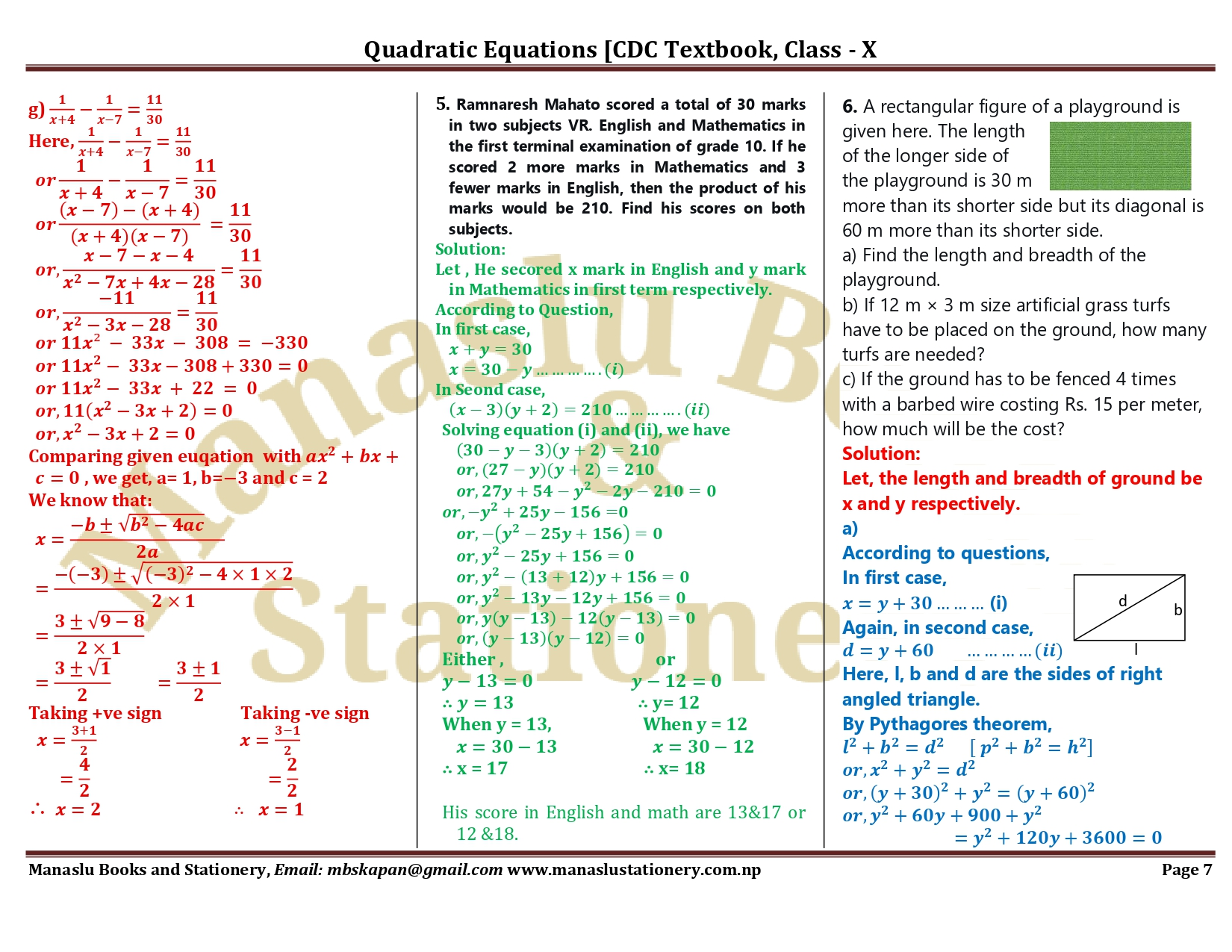
(iii) Formula method (Shreedhara Acharya's formula)
MCQs: Linear and Quadratic Equations
1. A first degree equation in one variable is called a ______.
A) Quadratic equation B) Linear equation
C) Pure equation D) Cubic equation
Answer: B
2. What is the highest power of the variable in a first degree equation?
A) 0 B) 1 C) 2 D) 3
Answer: B
3. The general form of a linear equation in x is ______ (where a ≠ 0).
A) ax² + bx + c = 0 B) ax + b = 0
C) a + b = 0 D) x² + c = 0
Answer: B
4. A second degree equation in one variable is called a ______.
A) Linear equation B) Cubic equation
C) Quadratic equation D) Pure equation
Answer: C
5. What is the highest power of the variable in a second degree equation?
A) 1 B) 2 C) 3 D) 0
Answer: B
6. The general form of a quadratic equation in x is ______ (where a ≠ 0).
A) ax + b = 0 B) ax² + c = 0
C) ax² + bx + c = 0 D) a + b + c = 0
Answer: C
7. The general form of quadratic equation (ax² + bx + c = 0) is also called ______.
A) Pure quadratic equation B) Adfected quadratic equation
C) Linear equation D) Cubic equation
Answer: B
8. A quadratic equation of the form ax² + c = 0 (a ≠ 0) is called a ______.
A) Adfected quadratic equation B) Linear equation
C) Pure quadratic equation D) Cubic equation
Answer: C
9. Which of the following is an example of a pure quadratic equation?
A) x + 3 = 0 B) x² - 64 = 0
C) 2x² + 7x + 3 = 0 D) x + y = 5
Answer: B
10. Which of the following is NOT a method to solve a quadratic equation?
A) Factorization method B) Completing square method
C) Formula method D) Substitution method
Answer: D