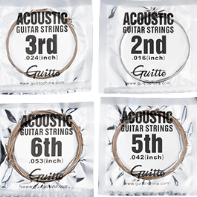
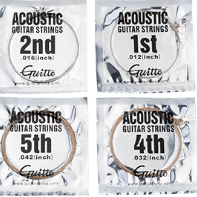
Guitar String ( 1st to 6th)
- SKU: 34411
- Availability: In stock
- Type: Art and craft
Features of the Standard Six-String Guitar Tuning (EADGBE)
Six Strings with Standard Notes
The six strings on a standard guitar are tuned to the following notes from low (thickest string) to high (thinnest string):
E (6th) – A (5th) – D (4th) – G (3rd) – B (2nd) – E (1st).
Symmetrical Layout for Easy Playing
The tuning is designed to allow familiar chord shapes, scales, and patterns to be easily played across different keys.
Octave Tuning
The 1st and 6th strings are both tuned to E, but two octaves apart. This symmetry helps with patterns in chords and solos.
Standardized for Most Music Genres
This tuning is universally recognized, used across genres like rock, pop, jazz, blues, classical, and more.
Adjustable Tension and Pitch
Players can tune up or down from standard tuning to suit specific songs or playing styles (like drop D or alternate tunings).
? Uses of Standard Guitar Tuning (EADGBE)
Learning and Teaching Guitar
Standard tuning is the foundation for most guitar lessons, tutorials, and songbooks, making it ideal for beginners.
Playing Chords and Songs
It allows easy access to open chords, barre chords, and power chords, essential for playing a vast range of songs.
Improvisation and Soloing
The tuning supports standard scale shapes (like pentatonic, major, minor), making improvisation more intuitive.
Songwriting and Composition
Musicians use standard tuning to write and structure songs due to its versatility and wide note range.
Tuning Reference for Other Instruments
Guitarists often use the open strings in standard tuning to tune other instruments or match pitch during ensemble performances.